

Mosquitoes are a familiar part of life in the Hudson Valley, especially during the warmer months. Around Modena, they are common near wooded areas, ponds, wet fields, farms, standing water, and even ordinary backyards. Because mosquitoes spread heartworm disease, dogs, cats, and ferrets in Modena and surrounding communities can all be at risk.
Heartworm disease often develops silently. Pets may appear completely healthy for months while the worms quietly damage the heart, lungs, and blood vessels. By the time obvious symptoms such as coughing, breathing problems, fatigue, or weight loss develop, the disease is often already advanced. This is especially true in cats and ferrets, which may show only subtle signs—or no signs at all—until they suddenly become very ill.
Year-round heartworm prevention in our area is an essential part of protecting dogs, cats, and ferrets from this serious disease. At All Animal Veterinary Services, we help pet owners choose the right prevention plan for each pet.
What Is Heartworm Disease?
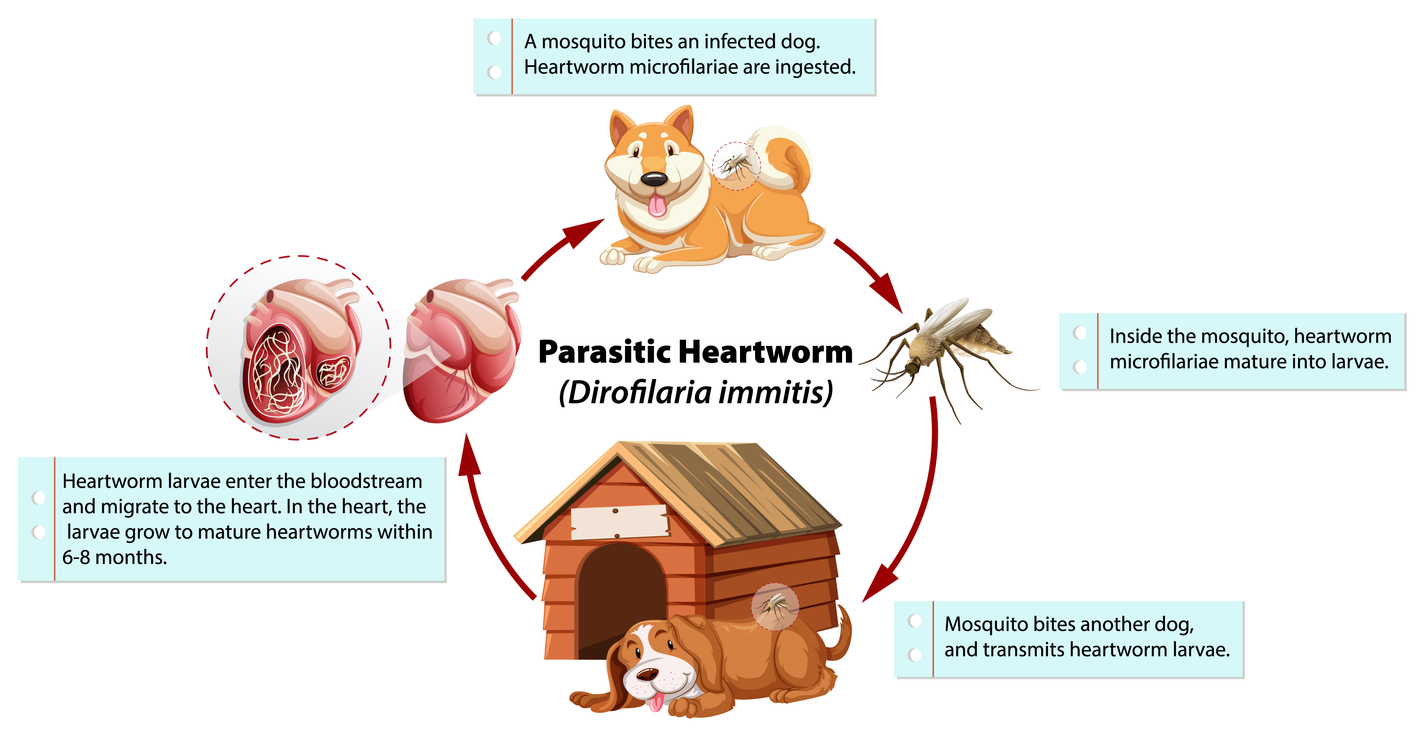
Heartworm disease is caused by parasitic worms that live in the heart, lungs, and blood vessels of infected animals. The disease spreads through the bite of a mosquito. When a mosquito bites an infected animal, it takes in microscopic immature heartworms (microfilariae). These develop inside the mosquito and are then passed to another animal during a later bite. Once inside the new host, the immature worms enter the bloodstream and develop over several months into adult worms that live in the heart and lungs.
As the worms grow, they interfere with normal heart and lung function. Over time, heartworm disease can lead to serious illness and even become life-threatening.
Heartworm disease is most commonly diagnosed in dogs, but cats and especially ferrets can also be affected.
Why Heartworm Is a Risk in Modena and the Hudson Valley
The Hudson Valley provides ideal conditions for mosquitoes during much of the year. Mosquitoes are especially common nearby:
- Ponds, creeks, and streams
- Wet fields and wooded property
- Birdbaths and water troughs
- Buckets, plant containers, and gutters that collect rainwater
- Outdoor water bowls and livestock areas
- Damp areas after heavy rain
Mosquitoes can also enter homes, barns, and outbuildings. This means indoor pets are not completely protected.
Symptoms of Heartworm in Dogs
Dogs are diagnosed most often and can carry many worms in the heart and lungs. Without treatment, the disease can lead to lasting damage, heart failure, and even death.
Symptoms may include:
- Persistent cough
- Tiring easily during exercise
- Difficulty breathing
- Weight loss
- Decreased appetite
- Swollen abdomen in severe cases
- Collapse or heart failure in advanced cases
Fortunately, heartworm disease in dogs can usually be prevented with a monthly preventive medication, annual preventative injection and yearly testing.
Symptoms of Heartworm in Cats
Cats are less commonly infected than dogs, but heartworm can still cause serious disease. Cats usually have fewer worms, but even one or two can cause severe breathing problems and sudden illness. Because there is no approved treatment to eliminate adult heartworms in cats, prevention is especially important.
Cats with heartworm may show:
- Coughing or wheezing
- Vomiting
- Loss of appetite
- Difficulty breathing
- Lethargy
- Sudden collapse in rare cases
There is no approved treatment to eliminate adult heartworms in cats. Because of this, prevention is especially important.
For more information about heartworm prevention and testing in dogs and cats, visit the American Heartworm Society’s guide for pet owners: https://www.heartwormsociety.org/pet-owner-resources.
Ferrets Are Highly Susceptible to Heartworm

Ferrets are one of the species most severely affected by heartworm disease. Even a single heartworm can be dangerous because of their small heart and lungs. Ferrets often become critically ill much more quickly than dogs, making year-round prevention essential.
Heartworm in ferrets may cause:
- Weakness
- Difficulty breathing
- Coughing
- Weight loss
- Sudden collapse
- Sudden death in severe cases
Unlike dogs, ferrets often become seriously ill with only one or two worms present. Ferrets that spend any time outdoors are at especially high risk, but indoor ferrets can also be bitten by mosquitoes that enter the home.
Because ferrets are so susceptible, All Animal Veterinary Services strongly recommends year-round heartworm prevention for ferrets.
The American Heartworm Society also provides information specifically about heartworm disease in ferrets: https://www.heartwormsociety.org/pet-owner-resources/heartworm-basics-in-ferrets.
Testing for Heartworm
Dogs should be tested for heartworm before starting prevention if they are over 6 months old or if doses have been missed. Preventive medication does not kill adult worms already living in the heart and lungs, but it can help prevent additional infections.
If a dog already has heartworm disease, starting preventive medication can sometimes kill large numbers of immature heartworms in the bloodstream at once. This may cause vomiting, diarrhea, weakness, drooling, rapid breathing, or, in rare cases, a more serious reaction. Testing first helps your veterinarian choose the safest plan.
Cats and ferrets are different. Heartworm tests are less reliable in these species, and there is no approved treatment to eliminate adult heartworms. Because of this, year-round prevention is especially important. If a cat or ferret has missed prevention, has symptoms, or may already have heartworm disease, your veterinarian can determine the safest next steps.
Why Heartworm Prevention in Modena, NY Is So Important
Heartworm disease is far easier, safer, and less expensive to prevent than to treat.
For dogs:
- Treatment requires multiple visits and testing
- Activity must be restricted for several months
- There is a risk of complications during treatment
For cats:
- There is no safe treatment to eliminate adult heartworms
- Care focuses only on managing symptoms
For ferrets:
- Treatment is difficult and risky
- Even a small number of worms can become life-threatening
Preventive medications are much safer than dealing with heartworm disease after it develops.
When to See the Veterinarian
Schedule an appointment if:
- Your pet is not currently on heartworm prevention
- You have missed one or more doses
- Your dog is due for yearly heartworm testing
- Your pet has developed coughing, breathing problems, or fatigue
- You have recently adopted a new dog, cat, or ferret
All Animal Veterinary Services can help you choose the best heartworm prevention plan for your dog, cat, or ferret.
Protect Your Pets Year-Round
Heartworm disease is a serious but preventable illness. In Modena and throughout the Hudson Valley, mosquitoes are common enough that every dog, cat, and ferret should be protected.
With regular prevention and routine veterinary care, you can greatly reduce your pet’s risk.
If you have questions about heartworm prevention in Modena, NY or would like to schedule an appointment, contact All Animal Veterinary Services today.
FAQ
Do pets in Modena need heartworm prevention year-round?
Yes. Year-round prevention provides the best protection and helps prevent gaps in coverage.
Can indoor pets get heartworm?
Yes. Mosquitoes can enter homes, barns, and other buildings, which means indoor pets can still be exposed.
Is heartworm really a risk in the Hudson Valley?
Yes. Mosquitoes are common throughout Modena and the Hudson Valley, especially near wooded areas, farms, ponds, wet fields, and standing water after rain.
Are ferrets really more likely to become seriously ill from heartworm?
Yes. Ferrets are extremely susceptible to heartworm disease, and even one worm can cause serious problems.
How often should dogs be tested for heartworm?
Dogs are generally tested once a year, even if they are taking heartworm prevention regularly.
Should cats and ferrets be tested every year too?
Not usually. Heartworm tests are less reliable in cats and ferrets. Your veterinarian may recommend testing if a cat or ferret has symptoms, has missed prevention, or is newly adopted.
Does my dog need heartworm testing before starting heartworm prevention?
Dogs should be tested before starting prevention if they are over 6 months old or if doses have been missed. If a dog already has heartworm disease, starting prevention can sometimes cause vomiting, diarrhea, weakness, drooling, rapid breathing, or, in rare cases, a more serious reaction.
What should I do if I miss a dose of heartworm prevention?
Contact your veterinarian. Depending on how long it has been, your pet may need to restart prevention and possibly be tested.
What time of year are mosquitoes most active in New York?
Mosquitoes are most active from spring through fall, but veterinarians recommend year-round prevention because missing doses can increase the risk of infection.