Winter in New York’s Hudson Valley brings freezing temperatures, snow, ice, and periods of cold rain. For horses, sheep, goats, pigs, and chickens, staying healthy through winter requires adequate nutrition, proper shelter, and reliable access to water.
At All Animal Veterinary Services, one of our greatest concerns during winter is seeing farm animals become seriously underweight or ill because their nutritional needs have not been met. We encounter these problems in our veterinary work, and many can be prevented with proper preparation and care.
Animals need sufficient energy and nutrients to maintain their body temperature. Even those with thick winter coats or access to shelter can struggle to stay warm if they are not receiving enough food. We want to help livestock owners recognize these risks before their animals suffer.
Meeting Nutritional Needs During Cold Weather
Cold temperatures can increase the energy animals need to maintain their body temperature, particularly during prolonged severe weather. However, nutritional requirements differ according to species, age, body condition, and reproductive status.
Good-quality forage is particularly important for horses, sheep, and goats. Fermentation of forage during digestion generates heat, helping these animals maintain their body temperature.
Pigs kept in outdoor pens or unheated barns may also need additional dietary energy during winter to help maintain their body temperature. Chickens require a balanced diet appropriate for their age and production stage, with sufficient feed available even when snow limits their normal outdoor activity.
Pregnant and nursing animals, growing youngsters, and those already underweight may have greater nutritional needs.
Meeting increased nutritional needs does not necessarily mean adding more grain. Horses, sheep, and goats may benefit from additional good-quality hay, while pigs and chickens may need adjustments to the amount of their regular balanced feed. Because nutritional requirements vary, owners should consult their veterinarian before making significant dietary changes.
Farm animals also need minerals appropriate for their species. Mineral supplements formulated for one type of livestock should not automatically be given to another because their nutritional requirements differ. For example, sheep are particularly sensitive to excess copper, which can accumulate in the liver and cause potentially fatal poisoning. Always use supplements formulated for the species you are feeding and consult your veterinarian before making substitutions.
We encourage owners to evaluate their feeding programs before severe weather arrives rather than waiting until animals begin losing weight.
For more detailed nutritional guidance, read our article, Winter Nutrition for Pets and Livestock: Supporting Healthy Body Condition.
Checking Body Condition Before Weight Loss Becomes Serious
A thick winter coat, wool, or feathers can conceal significant weight loss. An animal may appear healthy from a distance while having very little fat or muscle covering its bones.
Body condition scoring is a method of evaluating an animal’s fat reserves. Regular assessments can help owners identify weight loss before an animal becomes dangerously thin or weak. Because scoring methods differ among species, owners should learn the appropriate technique for their animals.
- Horses: Feel along the ribs, spine, and hips to assess fat coverage rather than relying on appearance alone.
- Sheep: Feel along the backbone and loin area, the muscles on either side of the spine. These areas should have adequate muscle and fat covering rather than feeling unusually sharp or bony.
- Goats: Assess fat and muscle coverage along the backbone, ribs, and other appropriate areas.
- Pigs: Assess fat coverage over the backbone and hips. Prominent bones or noticeable changes in body shape may indicate poor condition.
- Chickens: Gently feel the breast muscles on either side of the keel bone, the prominent bone running down the center of the breast. A sharp keel with little surrounding muscle may indicate poor condition.
Check animals regularly throughout winter, paying particular attention to those that are elderly, pregnant, nursing, ill, or competing with others for food.
If an animal is losing weight despite adequate feeding, veterinary evaluation may be necessary. Dental problems, parasites, and other illnesses can contribute to poor body condition.
Do not wait until an animal becomes severely thin or weak to seek help. Early intervention can prevent a manageable problem from becoming a serious health concern.
Providing Proper Winter Shelter
Good winter housing protects animals from wind, precipitation, and excessive moisture while allowing fresh air to circulate. Completely sealing a barn or shelter can trap humidity and ammonia, contributing to respiratory problems.
Although dry bedding, drainage, and ventilation are important for all farm animals, certain species have additional needs.
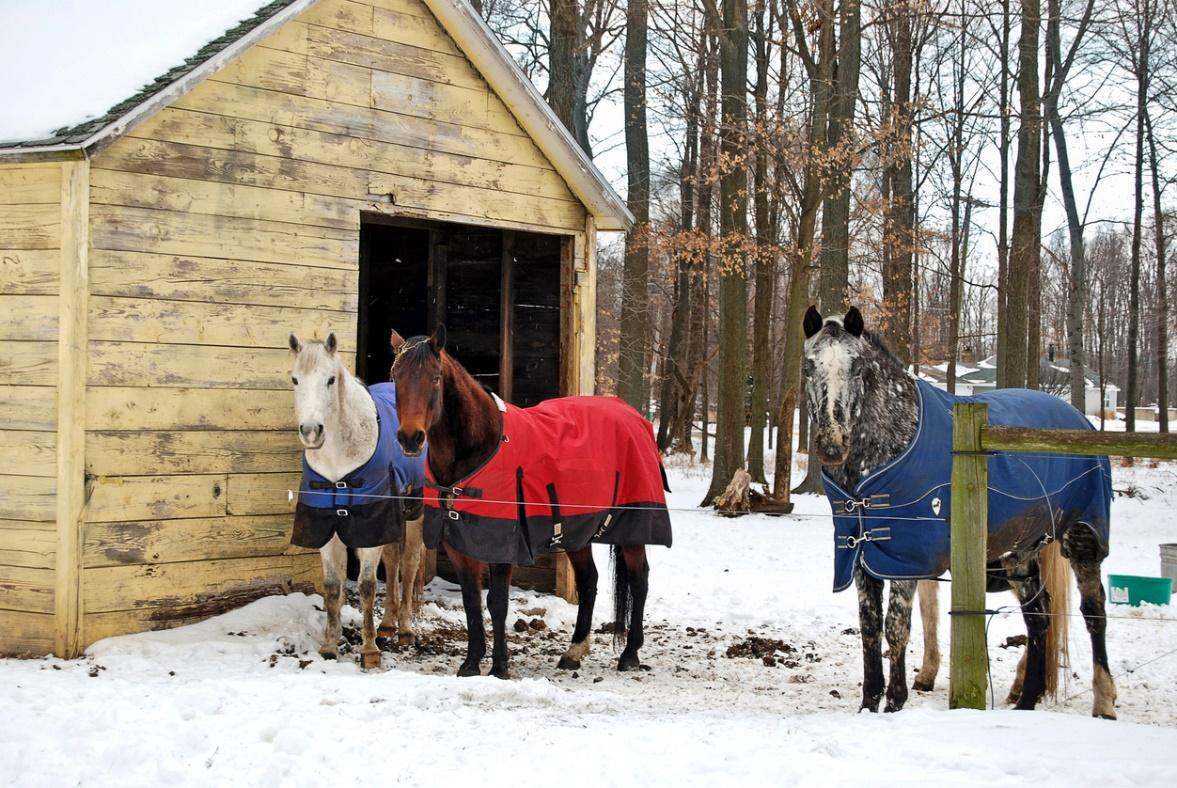
- Horses: Healthy horses with thick winter coats often tolerate cold temperatures well when dry and protected from wind. Run-in sheds should accommodate all animals without dominant horses preventing others from entering. Clipped, elderly, or underweight horses may benefit from properly fitted blankets.
- Sheep: A full, dry fleece provides insulation, but wet wool and recent shearing increase vulnerability to cold stress. Pregnant ewes approaching lambing and newborn lambs need additional protection. Newborns should be dried promptly and receive adequate colostrum.
- Goats: Goats are particularly vulnerable to prolonged wet conditions. Shelters should remain dry, with sufficient bedding or raised resting areas to keep animals off damp ground. Newborn kids need additional protection from chilling.
- Pigs: Pigs kept in outdoor enclosures or unheated shelters need a dry, wind-protected sleeping area with plenty of deep, clean straw bedding for insulation that allows them to nest together for warmth. Piglets require warmer conditions than mature pigs, especially in farrowing areas. Any supplemental heating equipment must be designed for agricultural use and installed safely to reduce fire risks around bedding.
- Chickens: Coops should block drafts at roosting level while allowing moisture to escape through ventilation openings. Damp bedding and condensation can contribute to respiratory problems and frostbite on combs and wattles. Healthy, cold-acclimated adult chickens generally do not need supplemental heat in a properly maintained coop, although chicks and sick birds may require additional warmth. Heat lamps can pose serious fire hazards around bedding and dust.
Keeping Drinking Water Available
Frozen water sources can quickly create problems for farm animals. Adequate water intake supports digestion, feed consumption, and normal body functions.
Horses are particularly susceptible to impaction colic when inadequate water intake contributes to dehydration. Other livestock may also reduce feed consumption when drinking water is unavailable. Be sure to provide salt blocks to help horses regulate their hydration.
Check buckets, troughs, water lines, and poultry waterers frequently during freezing weather. Heated waterers designed for livestock can help, but electrical connections must be protected from moisture and damage.
Preparing Farm Animals for Winter Storms
Heavy snow, ice, and power outages can interrupt feeding schedules, freeze water supplies, and make animals difficult to reach. Planning ahead is particularly important for farms that depend on feed deliveries or electrically operated equipment.
Monitor the National Weather Service’s local weather forecasts for approaching storms, freezing temperatures, and hazardous conditions. Before severe weather arrives:
- Stock emergency feed. Maintain enough hay, feed, and necessary supplements to last through delivery delays or inaccessible roads.
- Plan for water interruptions. Keep an emergency water supply and a way to provide drinking water if pipes freeze or power fails. A nearby stream or pond is not an adequate source for water as they can freeze or become contaminated.
- Inspect buildings and fencing. Check roofs, doors, drainage, and shelter access before storms.
- Prepare for power outages. Have backup arrangements for essential heating, ventilation, and water systems.
- Protect vulnerable animals. Make suitable arrangements for newborn, pregnant, elderly, sick, or underweight livestock.
- Maintain access. Keep routes to shelters, feeders, and water sources accessible for daily animal checks.
After a storm, inspect animals and facilities promptly. Do not assume animals are safe simply because they have shelter. Confirm that each animal has access to food and water and is behaving normally.
Recognizing Cold Stress in Farm Animals
Animals that are underweight, wet, ill, or exposed to severe weather may struggle to maintain normal body temperature.
Warning signs can include:
- Persistent shivering or unusual weakness.
- Lethargy, reluctance to move, or difficulty standing.
- Reduced appetite or water consumption.
- Unusual huddling or repeated attempts to seek shelter.
- Cold, injured, or discolored extremities.
Some animals may experience significant cold stress without obvious shivering. Severe weakness, collapse, or suspected hypothermia requires immediate veterinary attention.
We encourage owners to investigate changes in appetite, behavior, or activity promptly rather than waiting until an animal becomes visibly distressed.
Helping Your Farm Animals Stay Healthy This Winter
At All Animal Veterinary Services, we see firsthand how inadequate nutrition and harsh winter conditions can affect the health and welfare of farm animals. It is especially concerning when animals become seriously underweight or ill from problems that could have been prevented.
Providing sufficient feed, checking body condition, maintaining appropriate shelter, and preparing for winter storms can make a significant difference.
If you notice an animal losing weight, struggling to stay warm, or showing signs of illness, please contact All Animal Veterinary Services. Early veterinary care can help prevent unnecessary suffering and protect your animal’s health throughout the winter.